🪡
How Stitch Holes Are Placed — Pitch and the Leftover
This page covers features added in v4.2.0.
The Leftover choice under a fixed pitch (Far end / Both ends / A few gaps) and the Up to count were added in v4.2.0. In earlier versions a fixed pitch always left its leftover at the far end of the run. Spacing (Straight-line / Along the path) and the stitching modes are older features.
The stitch tool has fewer decisions in it than it looks. They are three separate questions, and each one settles something different.
- What the spacing is measured with
- Whether the pitch may move — and if it may not, where the leftover goes
- How corners are treated
Every figure on this page is drawn from hole positions the app actually computed.
Reading the figures
Stitches at the figure's own reference length are drawn with a thin line. A stitch longer than that is tied in orange, a shorter one in green. A dashed line is the margin left at an end, and a grey circle marks a join between two shapes. Auto-pitch figures carry no marks, because every stitch in them is the same length.
① What the spacing is measured with② Whether the pitch may move③ What corners change④ How corners are treatedWhich to chooseThree things worth knowing
① What the spacing is measured with
Straight-line keeps the distance from one hole to the next constant. That is what a two-prong chisel measures, and it is what you see once the piece is sewn — the thread runs straight from hole to hole, and the stitch line it follows is not visible at all in the finished work.
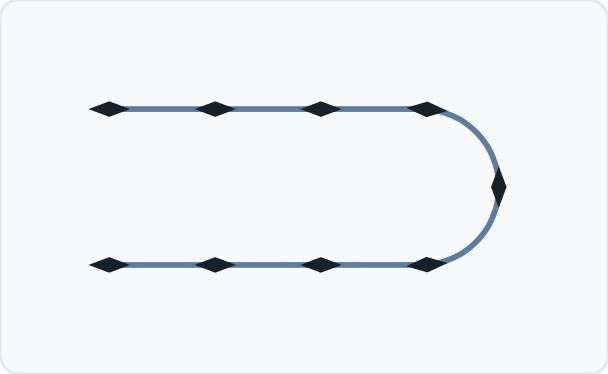
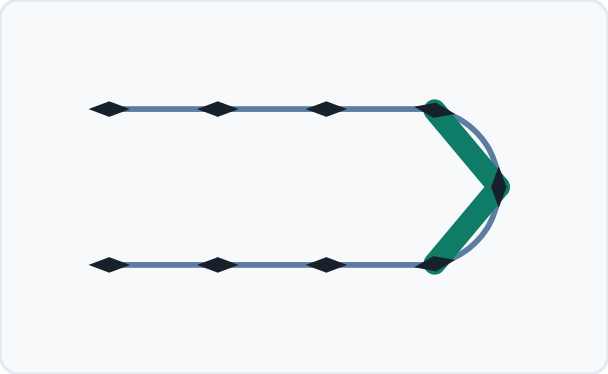
Along the path keeps the distance along the line constant. At the same , holes on a curve then sit visibly closer together.
Below, a tight R3 curve punched at . Both figures are labelled with the straight-line distance between holes.
Straight-line (default) — the same distance on the curve as on the straights.
Along the path — tighter through the curve. The smaller the radius, the wider the difference.
② Whether the pitch may move
A line is almost never a whole number of pitches long. 50mm at 4mm is twelve stitches of 48mm, and left over. What happens to that is the question.
Auto pitch rounds the number of stitches and moves the pitch instead. The error is spread thinly across every stitch and disappears. Most of the time this is all you need.
Fixed pitch keeps the pitch exactly where you set it. A real stitching chisel has its prongs where it has them and they do not stretch, so if you are punching with a tool in your hand, this is the one. The leftover then has to go somewhere, and you choose where.
Auto pitch — 13 stitches. The pitch becomes and the leftover is gone.

Fixed / Far end — how it has always worked. The last stitch alone comes up short at . All of the slack lands in the one place you are most likely to look.

Fixed / Both ends — the pitch stays at and the whole run moves in by at each end. No hole lands on the end itself, which is what leaving a margin means.

Fixed / A few gaps — both ends land exactly, and the slack is gathered into two stitches. A straight line offers nowhere to hide it, so the two sit as far apart as they will go.

③ What corners change
Real patterns are not one straight line. Below is a 60 × 38mm stitch line with R2 fillets at the corners. A corner always gets a hole, so the line is divided at its corners and each run has a leftover of its own.
And the stitches that take the adjustment are chosen from the ones that bend. Along a straight, a stitch that is long or short is compared with its neighbours and read immediately; on a curve, the spacing already looks uneven from any angle, so it is not.
Far end — a short stitch is left just before each corner.
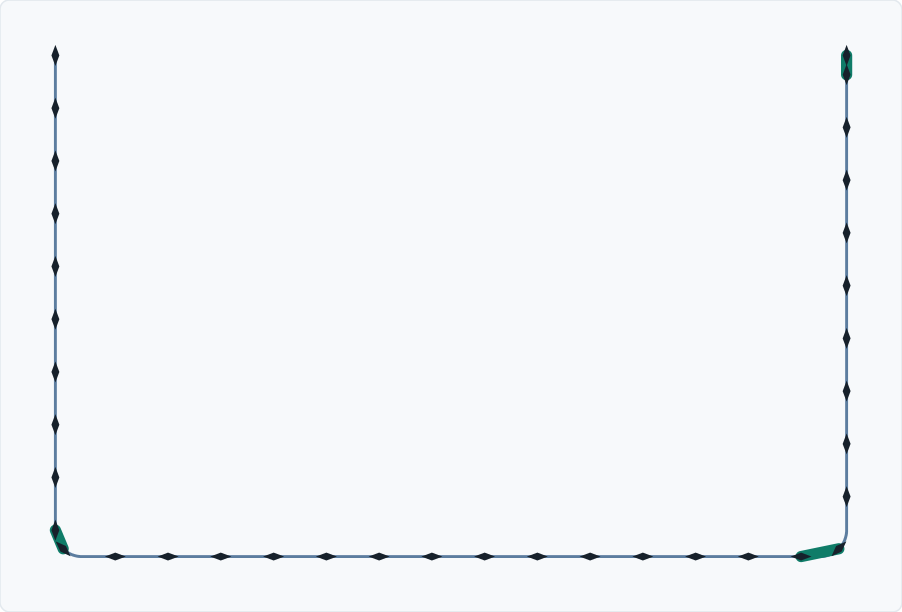
Both ends — both ends move in by . The bottom run is pinned between two corners and has no end to give its leftover to, so it uses the rule below instead.
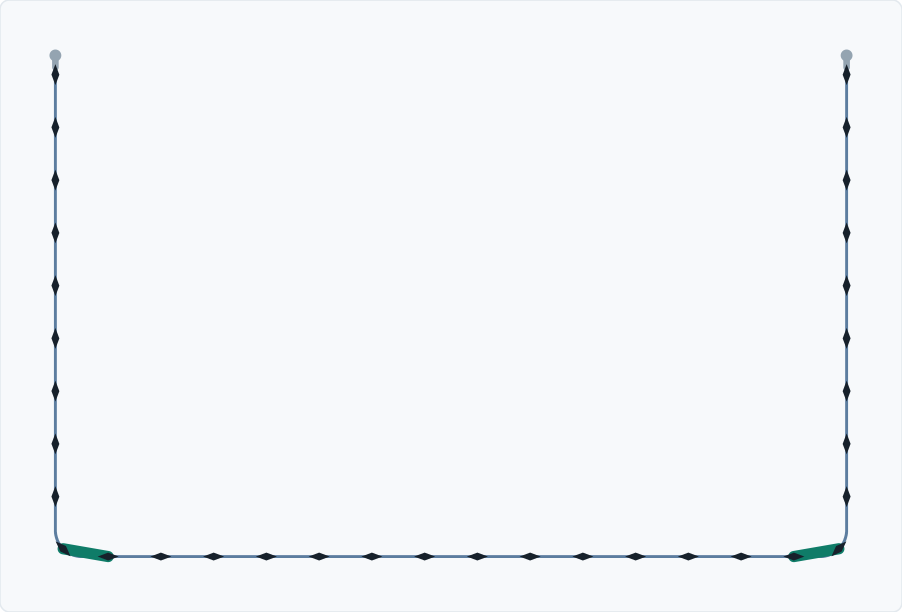
A few gaps (up to 2) — all four adjustments land on the fillets. Not one of them is out on a straight.
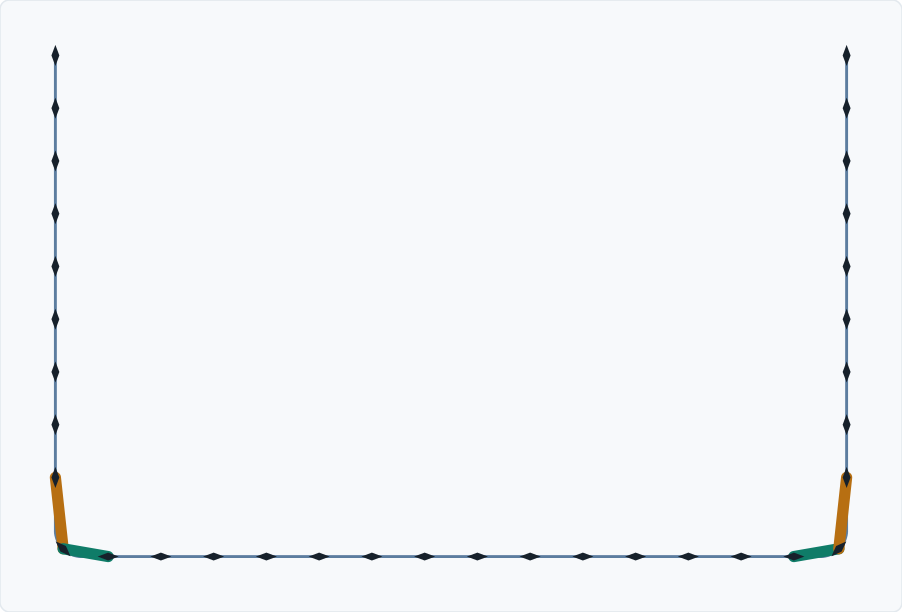
What changes when you raise the limit
Up to 1 — one adjustment per run, so each one has to give more.
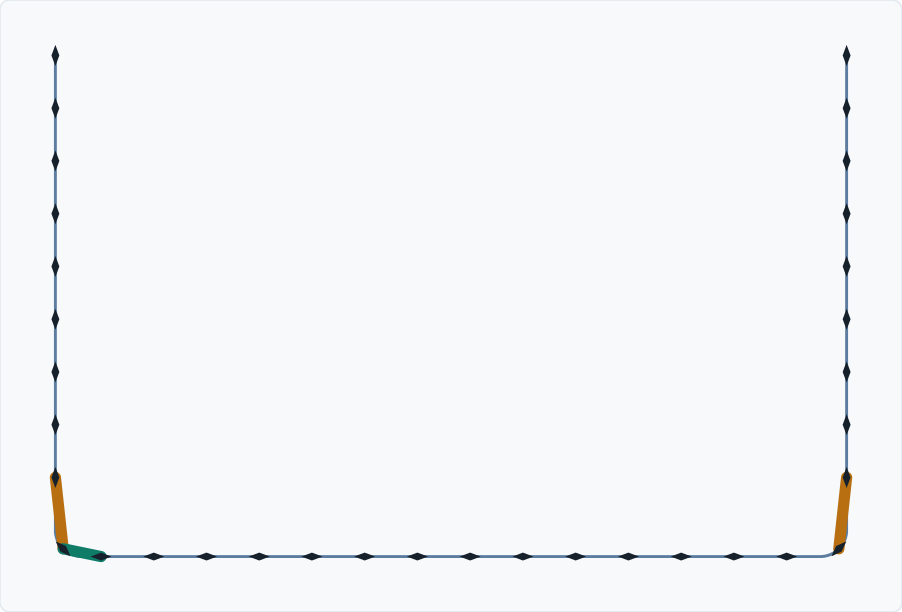
Up to 3 — identical to "up to 2". The number is a ceiling, not a quota — a run with only two bends to hide in does not invent a third adjustment.
④ How corners are treated
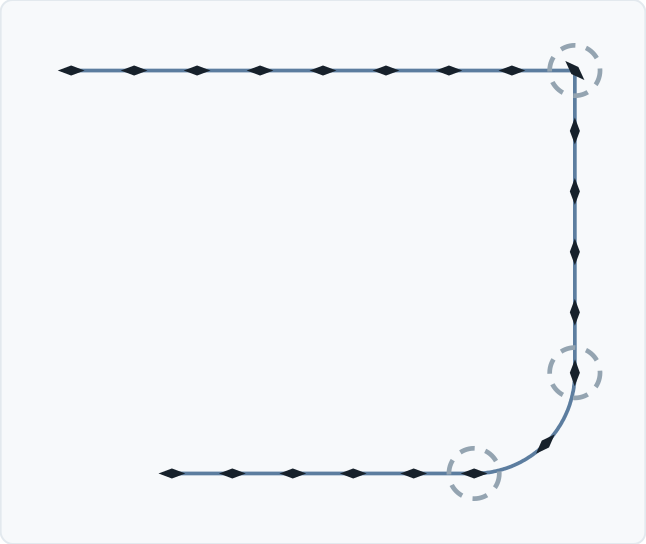
The third question is whether a hole goes where the line turns. Below: a straight, a right angle, a straight, a smooth R6 bend, a straight — one connected line. The grey circles are the joins between shapes; watch whether a hole lands on them.
Even — joins are ignored. The whole line is divided equally, so nothing lands on the right angle either.
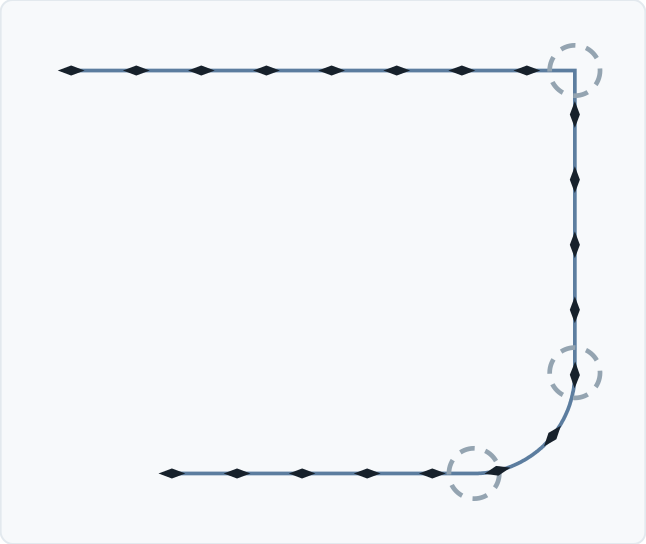
Smart corners (default) — a hole on the right angle. The two joins that continue smoothly are not corners, so it walks straight through them.
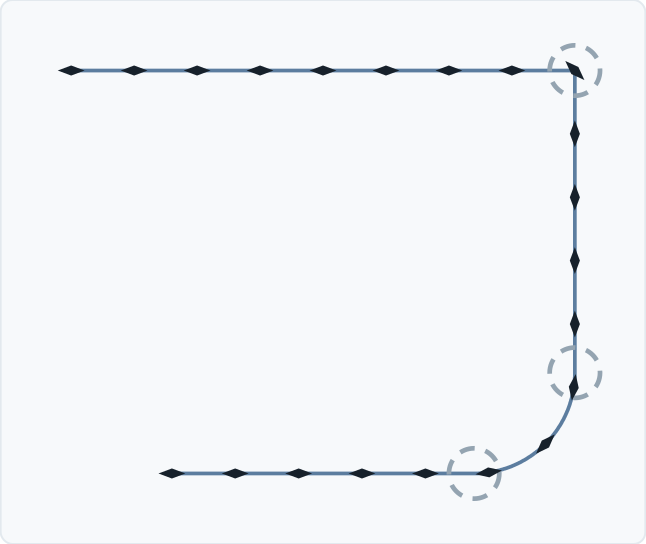
All junctions — a hole on all three joins. Each run is divided on its own, so a short arc ends up with wider stitches.
Which to choose
| What you want | Setting | Why |
|---|---|---|
| No particular preference | Auto pitch / Straight-line / Smart corners | The defaults. The pitch stays within 2–3% of what you asked for. |
| Punching with your own chisel | Fixed pitch | The prongs do not stretch. All that is left is to decide where the leftover goes. |
| Equal margins at the ends | Fixed / Both ends | No hole on the end itself. One line or a line that turns corners, the two margins come out the same. |
| A hole exactly on each end | Fixed / A few gaps | Ends and corners land exactly. The slack goes into the curves. |
| Sewing right round an edge | Fixed / A few gaps | A closed loop has no ends. Choosing "Both ends" falls back to this rule anyway. |
| The sewn look above all | Straight-line | What you see is the thread, and the thread is a straight line. The default. |
| Distances measured on the drawing | Along the path | Lengths along the line match. Holes look tighter on a curve. |
Three things worth knowing
On a curve, a ruler reads more than the pitch
On an R5 fillet, a straight-line pitch measures followed along the line. If you measure between two holes on the drawing by tracing the line and it looks like a stitch is missing, it is not. The pitch is a straight-line distance.
A corner always gets a hole
Which is why a run pinned between two corners cannot use "Both ends" — it has no end to put a margin at. That run uses the "A few gaps" rule instead. Keeping the pitch exactly where you set it is the promise that comes first.
"Up to" is a ceiling, not a quota
If a run has fewer bends than the limit, it uses fewer. It will not put a stitch out on a straight just to reach the number — that stitch would be the most visible one on the piece.